Tuesday, April 21, 2026

Procrastinators: Knock it Off


I remember many years ago when I first started submitting my work to various literary journals, I was a nervous wreck.  I would write something, change it a hundred times, rewrite, rewrite, rewrite.  I was always pushing that last minute deadline – sometimes submitting my stuff literally at the last second.

I write in many different genres, and have been published many times in some great journals.  I have written multiple books, including fiction, poetry, and non-fiction.  I started using the online submission program, Submittable (which our Writers Alliance literary magazine, Bacopa, uses for their submissions).  It was easy to use and provided me with a way to keep track of all the many stories, poems, and pieces of non-fiction I was sending. You can download your files, you can download lists of your submissions, and you can access them anytime you want.

I have to admit, I’m one of those chronically late people.  My friends tell me about an upcoming event a half hour earlier than it actually starts so I’ll make it on time. My relatives send me texts – “Are you on your way?”  “Where are you now?”

But what the heck, who doesn’t want to make sure their writing is perfect before they submit?  Right?  Keep editing, keep changing, keep going till that last minute.

Or at least, that’s what I thought until – until a very strange situation occurred.  I received the weirdest rejection I have ever seen.  “Dear Ms. Thornton, thank you for your incredible piece.  We really loved it.  Please consider submitting again.”

Okay, that was a rejection?  Huh?  What the heck?  I couldn’t understand why, if they loved my work so much, they would reject it with such positive responses.  If they liked it so much, why didn’t they accept it?

And then the journal came out. You know, a lot of times, when you submit to a particular journal, you get a copy of the final piece.  (For Bacopa, WAG members get a free copy included with their membership).  I opened my copy of the journal and read through all the fiction pieces to see what the editors accepted rather than my piece, which they said they loved.  And I was shocked.

One of the pieces was so close to what I had written that we could have used the same description for each story.  Yes, the other author wrote about a different environment, and the details of their characters’ lives were different from the storu I wrote.  But basically, we had both written about a family conflict that finally gets resolved at the end of the story.  In a very similar way.

I couldn’t believe it.  Why would they accept this story instead of mine?  I was convinced mine was better written, that my details were more specific, that my characters were more realistic. After all I’d spent every spare minute of the deadline time working to correct every little comma, every tiny error, every –

Wait a minute… Submitting at the very last minute?  Right up to the deadline?  Was it possible the editors of that journal had accepted the piece by that other writer before I even submitted my work?

Of course it was possible. So, I started submitting my pieces earlier and earlier.  It was so hard to let my babies go, knowing that I could have had more time to make them more perfect.  My ongoing joke when I open up a file I’m still working on is, “Who broke into my computer and wrote this crap?”

But let’s face it.  Most writers are never, ever going to be satisfied with their work.  I’m an editor, too.  I always ask the people whose books I’m editing if they want me to send their work back chapter by chapter or send the whole thing all at once.  I can’t tell you how many times my clients have sent basically sent the same response back to me: “I never want to see the darn thing again.”

Okay, so we joke.  But it’s true we’re usually a little obsessive about our work, and once we submit it, we feel that we could have done better.  We could have made it more perfect. 

The thing is, someone else may be sending something similar, and they might get accepted before your work even gets out the door. 

Now, I’m not saying be irresponsible.  Let’s face it, if something you wrote gets published and it has a lot of mistakes in it, you’ll never hear the end of it.  Your fellow writers will log in laughing.  Or the editors will reject it anyway.

Do you want to be famous after you die?  Well, go ahead and delay sending your work out.  After all, a lot of writers got famous for their work after they died, such as Franz Kafka, Emily Dickinson, Henry David Thoreau, John Keats, Herman Melville, and Zora Neale Hurston (https://blog.bookbaby.com/infographic/famous-authors-infographic). But if you’d like to see your work get published, enjoy the acclaim, show it off, then get it ready early.  Clean it up as much as you can and let it go.

Our WAG literary magazine, Bacopa, is open for submissions now, with a deadline of April 30  (https://writersallianceofgainesville.submittable.com/submit)   So, procrastinators, don’t wait.  Knock it out of the ballpark! Send it now.  


Bio

Wendy Thornton has been published in Riverteeth, Epiphany, MacGuffin and many other literary journals and books. She writes memoir, short stories, poetry, and a mystery series, Bear-Trapped.  She just published her third book in the series, Bear-Trapped: Windsept, in Jan. 2026.  She’s fiction editor of Bacopa literary magazine, has been nominated for a Pushcart Prize, has won many literary awards, and started the Writers Alliance (www.writersalliance.org).


Tuesday, March 24, 2026

Introducing Creative Nonfiction editor Aliesa Zoecklein

I am thrilled to join the team at Bacopa as the editor of creative nonfiction! I bring to the task my long-time love of language along with decades of reading and writing experience. 


When reading creative nonfiction, I want to feel completely drawn in.  A clear narrative voice captivates me. I love being swept up into circumstances and particulars that may be very different from my own.  


I appreciate and rely on details of place to make the narrator’s story believable and compelling. For me, the best writing offers surprise and avoids cliché. I want to read language that lets me feel the emotion, the tension in the narrator’s predicament. As a poet, I celebrate precision and risk (the vivid image, for example, carefully chosen) as well as unexpected development or an intriguing turn of phrase. 


A brief note on what to avoid: I’ll always decline a submission that’s overly cliched, vague, or includes even a hint of racism, homophobia, ableism, or condescension to groups or other cultures. I’ll likely decline a submission that is too much of a straightforward essay, developed perhaps but without depth or enough weave between the “I,” the events, and the setting. 


Creative Nonfiction Editor, Aliesa Zoecklein taught composition, literature, and creative writing at Santa Fe College. Her poems are published in several journals. Her chapbook won the Peter Meinke Poetry Prize and was published by YellowJacket Press. 


Monday, June 2, 2025

A Personal Perspective on the Submissions Process

By Bacopa Literary Review Managing Editor T. Walters

At the beginning of this submissions period, I wrote a blog post about our internal submissions process and how it works. Now, I’ll get a little personal… Prior to joining Bacopa Literary Review, I felt intimidated by the process of submitting to magazines and literary journals. At Bacopa, I gained confidence in submitting my work by getting an intimate look into how the submissions process works and the standards for acceptance. 

I’ve learned that acceptance is contingent on multiple factors: technical/grammatical errors, strength of voice, stylistic elements, plot (for prose) as well as an editor’s personal preferences. Sometimes, a piece just needs an extra bit of work before it is published. Often, acceptance is subject to logistical or monetary constraints. Since our team receives more than a thousand submissions each year, some pieces are declined because we simply don’t have the room. If we, as a board of volunteers, accepted one piece from each of our submitters, the journal would be over a thousand pages long!

For me, knowing the limitations of a magazine or journal helps soothe the sting of rejection. As writers, we often have to develop a thick skin to withstand the submissions process, dealing with the inevitable “No’s” in order to finally receive that “Yes!” When I now look back on some of the pieces I’ve submitted, I understand why they weren’t accepted. In fact, with the assistance of our 2024 Poetry Co-Editor J. Nishida, I edited a previously-rejected poem to submit to an anthology and it became my first publication! I completely reformatted the poem, made drastic cuts (then added some stanzas back in) and refined the voice and stylistic features I included. The published version was the fifth edition of said poem, one I edited over multiple years. 

All this to say: becoming published is a process and it might take a while. Support from your fellow writers can help you along your journey, providing feedback and suggesting edits to strengthen your piece. Bacopa Literary Review, itself, is a project run by the Writers Alliance of Gainesville (WAG), a grassroots nonprofit organization that “promotes, encourages and supports aspiring and experienced regional writers”. WAG is a clear example of writers-helping-writers, as well as a resource for local folks! 

If you’d like to join WAG, you can visit the link here to join online or by mail -- annual dues are $40. Membership benefits include but are not limited to: a free copy of Bacopa Literary Review, participation in a genre-specific critique pod, a bi-monthly newsletter, and free admission to special events.

For those of you who are well-seasoned in submitting, what advice would you give to first-time or less-seasoned submitters? What is something you wished you’d known when you first started submitting pieces to magazines and reviews?

Managing Editor T. Walters is a writer, embroiderer, and musician living among the orange trees. Their work appears in The Sapphic Sun and Nymeria Publishing’s Descendants of Medusa. Tea lives to connect, create, and marvel at nature’s many wonders.

Tuesday, May 20, 2025

Visual Poetry by Example

By Bacopa Literary Review 2025 Poetry Co-Editor Oliver Keyhani

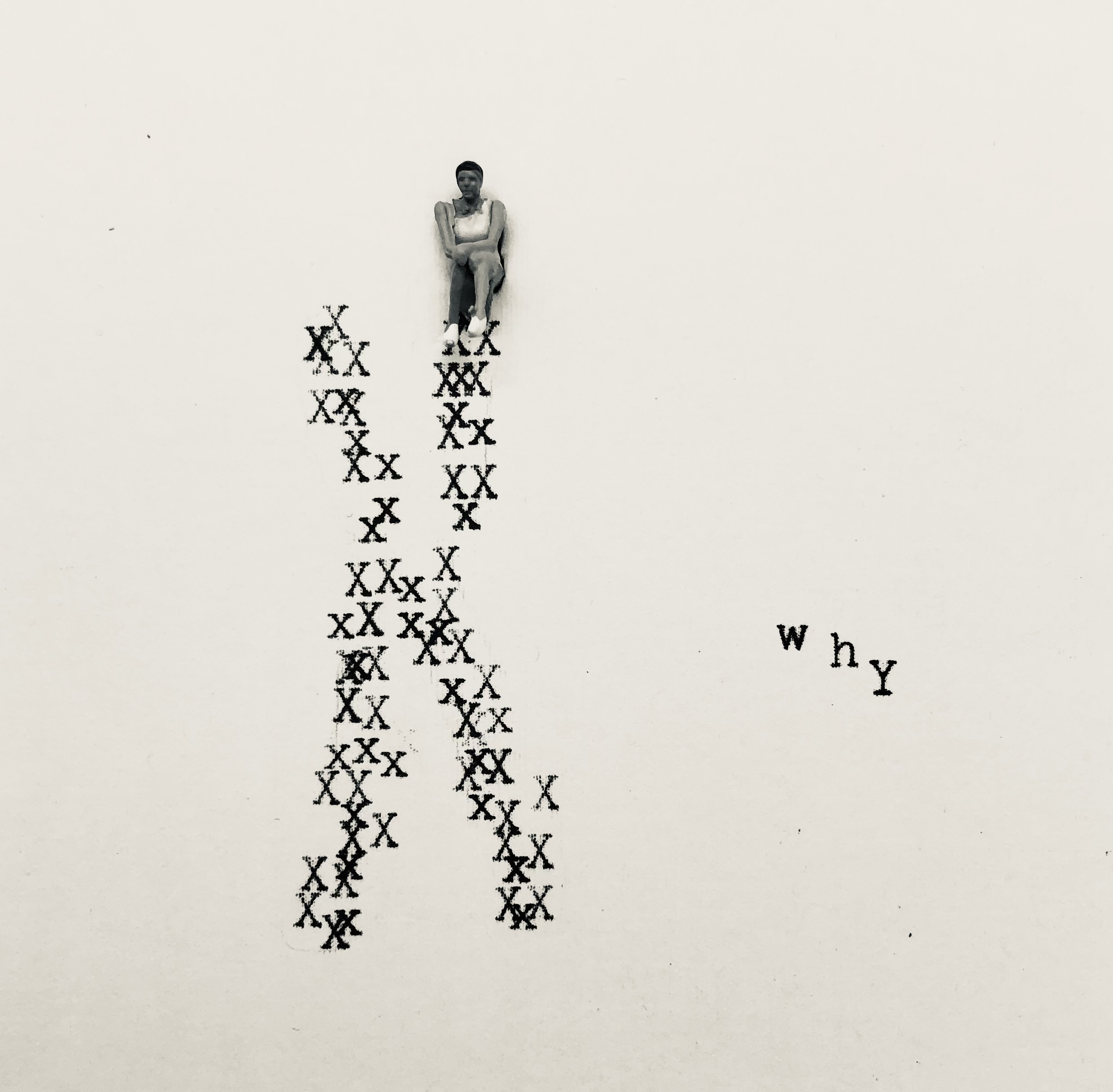
Oliver Keyhani has provided an example of Visual Poetry, please see his previous blog post that provides more details about this category.


Poetry Co-Editor Oliver Keyhani is a visual and performance artist, poet and writer. He is a member of the Gainesville Fine Arts Association and a founding member of the Carousel of Souls Curiosities Circus Troupe (CoSCCT). His short experimental poem-play “Children of Gaia” has been produced at the Tank Theater in NYC. His hybrid visual-poetry works the “dada manuscripts”: thé avec dada and the book of dada dandies have received international acclaim.

Monday, May 12, 2025

Thoughts from Bacopa’s Formal Poetry Editor: Haiku? Sonnet? Chanso? Golden Shovel?

By Bacopa Literary Review 2025 Formal Poetry Editor Susan Ward Mickelberry

As 2025 Formal Poetry Editor for Bacopa I anticipate and welcome a variety of poetic forms, and there are many. Writer’s Digest, for instance, offers the wonderful “List of 168 Poetic Forms for Poets.” We all have favorites, and I tend to like Japanese forms such as haiku, tanka, and haibun. And who knew there was such a thing as a haiku sonnet? Some poets enjoy working with the traditional Elizabethan sonnet, the Italian sonnet, or the French chanso. Some may enjoy the flexibility of a cascade poem. Other popular poetry styles include the pantoum, villanelle, and golden shovel. And on and on, within this particular list up to 168. What a grand variety of choices to play with.


I am looking forward with delight to reading all poems that arrive in my category. I appreciate and am engaged by poems that are introspective, as well as poems that expand one’s vision with a unique way of viewing the world. I enjoy being surprised by a poem that evokes an imaginative experience. I especially appreciate poems that draw on a contrast between nature and the human experience, that can be deeply personal, but also touch a universal aspect in us all. Whether humorous or overwhelmingly sad.


When it comes to specifics, I’ll be looking for meticulous, surprising use of form, imagery, and details. Mood and emotion, or their contrasts, a knowing voice and spare details can be powerful. 


Finally, I will pay attention to clever, cogent use of form, including meter, rhyme, flow, and voice, as demanded by the poem itself.


Poets might ask themselves, will my poem make the reader cry, laugh, agree, learn? Is it fresh and honest? Is it spiced with narrative tension? Will it beg to be read again?


Poetry Co-Editor Susan Ward Mickelberry is a writer, editor, poet, and long-time yoga teacher. Her poetry collection And Blackberries Grew Wild was published by Roadside Press in 2024. She is a 2024 Pushcart nominee. Poems appear in many publications including This is Poetry: Volume IV: Poets of the South. She participates in regional poetry readings and events, most recently at the Lynx Bookstore and at Civic Media Center’s Poetry Jam.

Wednesday, April 30, 2025

Let me live in your world: what I look for in Creative Non Fiction

By Bacopa Literary Review 2025 Creative Nonfiction Editor Stephanie Seguin

I am a firm believer that reading stories is the only thing that really allows us to sink into another person’s skin, and see things as they see them.  I think reading fiction, or good creative non-fiction, is our best tool for building empathy and understanding.


So when I am reviewing submissions for Bacopa, the first thing I’m looking for is pieces that read like fiction. I want to be immersed in the author’s situation for a short time. I love language used in interesting, beautiful, intentional ways to convey emotion or set a scene.  I like a sense of who the narrator is and how they feel. If I can hear a person's voice telling me a story, that story usually goes in the maybe/yes pile.


Also, being an individual with my own life experiences I will naturally gravitate toward certain stories. For instance, I am more apt to be moved by a story about a guy who loved his grandma because I loved my grandma. This, for me, is the magic of this category, reading a story by someone in a vastly different life or place, and finding things in common.


A brief note on what I generally skip: Straight forward reporting of events without emotion or any of the above factors is usually something I pass on.


A brief note on what I always skip: If a piece has even the slightest hint of racism, sexism, homophobia or is condescending to a particular group of people or culture, it is a no for me. I get a fair number of pieces where people have traveled to a far-off place and have thoughts about the locals. Also please don’t send a story about your crazy ex-wife unless the written response from her is included---THAT I would at least put in the maybe pile!)


Creative Nonfiction Editor Stephanie Seguin studied English Literature and French at the University of Florida. She has published humor, short fiction, and personal memoir and spent over 15 years as a freelance editor and teacher of languages.

Monday, April 21, 2025

Floating Ideas

By Bacopa Literary Review 2024 Fiction Honorable Mention K. S. Dearsley

Wile E. Coyote has more chance of catching the Road Runner than I have of catching a good idea if I chase after it. The more I try to force a story into my head, the more likely I am to end up with nothing but a headache. 


When I had the idea for 'Waking the Legend', which was awarded an Honorable Mention in the Bacopa Literary Review 2024, I was posing for an art group with nothing to do except stare at a blank wall for half an hour. I could not get on with chores, nor scroll through the internet, and conversation would not have been welcome. I soon gave up trying to remember lists of German verbs and planned activities. Here was an opportunity to let my thoughts drift and to daydream without 'oughts' or 'shoulds' to stop me.  


I had imaginary conversations, heard snatches of music, and remembered walking that morning through the disused quarry which is my nearest park. The sandstone has a fault in it that children call the Bear Hole in which someone lost their Yorkshire terrier when it was scared by fireworks–according to local legend.


I did not realise I had the beginning of an idea then, which was just as well. Try to catch an idea too quickly and it is likely to slip out of your hands like a bar of wet soap. Had I attempted to fix the idea too soon, I would have tried to construct a logical story, and discovered when I wrote it down that I only had half of it. As it was, my thoughts continued to drift from one random snippet to another. It was only later, when my conscious mind caught up with where daydreaming had led that I realised how these snippets combined, and that I had a tale to tell.


Life usually buzzes with a constant stream of information and activity. Without an opportunity to be still and to daydream, the imagination gets crushed under all that stimulation. Perhaps if Wile E. Coyote gave up setting traps and concocting dastardly plans for a while, the Road Runner would come to him.


Beep! Beep!


K. S. Dearsley's fiction, plays and poetry have appeared in various publications. She lives with her husband in the middle of England, and when she is not writing they borrow other people's dogs to take for walks. Her novel, Discord's Shadow, the third in the Exiles of Ondd series, was nominated for Best Novel in the British Science Fiction Association Awards 2021. Find out more at http://www.ksdearsley.com or follow her @ksdearsley.bsky.social

Monday, April 14, 2025

Fiction Criteria for Bacopa Literary Review 2025

By Bacopa Literary Review 2025 Fiction Editor Wendy Thornton

For this genre, it’s important for stores to be self-contained, not part of a larger piece. Please try to write clearly, using proper grammar, unless you are subverting conventions for deliberate emphasis. The language you use should pull the reader in, so try to use interesting literary descriptions, but beware of going on too long. Try to use creative language without overcomplicating it—take a look at the writings of Ernest Hemingway.  Simple but powerful. 


Your characters should be complicated, but their stories should be told in the text by dialogue and action, not solely by descriptions. Their stories should encourage the reader to get involved in the story. In other words, don’t say the protagonist “was strong”—describe how they were strong.  Great authors to read in this genre include Alice Monroe, Joyce Carol Oates, Raymond Carver or James Baldwin.


Works that are racist, sexist, homophobic, or otherwise bigoted towards marginalized groups will not be accepted. Works that critique these structures of oppression and depict their impact on characters are welcomed. Finally, try to craft a thoughtful, intentional ending for a story that is, as a whole, concise and complete. 


Fiction Editor Wendy Thornton has been published in Riverteeth, Epiphany, MacGuffin and many other literary journals and books. Her latest books, Arrested Motion and Hanging On, were published in 2023 and 2024 respectively.  She has been nominated for a Pushcart Prize, has won many literary awards, and started the Writers Alliance (www.writersalliance.org).
Monday, April 7, 2025

Playing Tennis Without a Net: The Formless Form of Free Verse

By Bacopa Literary Review 2025 Poetry Co-Editor Grayson May

What is free verse? Certainly, free verse does not mean "without structure or meaning." Nor is free verse glorified prose. It is not a lesser, easier or even lazier form of poetry. Rather, it is the daring to build a poem differently, with great passion, boldness, intention, and—of course—freedom. 

There is freedom in formlessness. There is form in formlessness. Free verse means that the poet is an entrepreneur, empowered with the ability to stake their own claim in rhythm, meter, rhyme, and original or avant garde form. It is a rejection of the formal or the regular. Free verse is anarchical. T. S. Eliot says: "No verse is free for the man who wants to do a good job." This is less indictment of free verse than it is of the misinterpretation of what free verse really is. The true free verse poet breaks from traditional formatting, pushing the limits of what free verse and free form can do: and be. 

For free verse poems are living things. They are things to be held and handled. They speak like creatures, not like poems. Robert Frost once wrote to Carl Sandburg that writing free verse is like "playing tennis without a net." Sandburg famously replied: "There have been poets who [played] more than one game of tennis with unseen racquets, volleying airy and fantastic balls over an insubstantial net, on a frail moonlight fabric of a court." The free verse poet must be courageous in bringing such fantastical things to life.
 
And in order to create such life, the free verse poet must have deep knowledge, insight and understanding of what poetry is and has been. Free verse poets must have deep comprehension of what past poets and present poets have done in order to determine what makes a future poet. This insight may translate as allusion to traditional poetic verse. It also might translate as an intentional breaking of and from the poetic canon. Picasso said that in early years he mastered the skill and comprehension of traditional drawing and painting; yet, it took a lifetime for him to learn to make art from a place of limitless, childlike freedom. So must a free verse poet first understand how to be a formal, traditional poet before they can fully, tenderly, and rapturously embrace their free-verse-ness.

Finally, free verse poems must actualize their very name by creating shockwaves that reverberate in the reader. We've spoken of the boldness, the courage, the distinction and the comprehension demonstrated by the free verse poet. Now we must address the impact that a free verse poet makes in the reader and/or listener. It is a physical reverberation, one that may render gasps, tears, ecstatic shakes and/or earthquakes. Because free verse is synonymous with tremendous innovation, uniqueness, originality, eccentricity and authenticity, its impact is one that stuns or profoundly moves any who encounter it. Both figurative and literal movement! Free verse is a rapture, a reckoning, a revelation, an event, an apocalypse, a disruption

For those free verse poets or free-verse-poets-to-be searching for inspiration, look to Whitman, Ginsberg, Angelo, Hirschfield, Hughes, H.D., Eliot, Rich, as well as earlier examples, like Gustave Kahn, Rimbaud and Mallarme who originated the vers libre movement in late 19th century France, or the London-based Poet's Club, or even Goethe and Milton who played with free verse long before it had a name. Today, free verse has become an over-diluted, waterlogged term, because it is the norm. It has lost its spark. It has become an excuse not to rhyme. Even so, there are still free verse poets out there today making living creatures that will punch the breath out of you. Give yourself the freedom to be one of them. To be new. To eschew. It's never too late to make something terrifically, terrifyingly you

About the editor: Poetry Co-Editor Grayson May is a poet, playwright, writer, artist and actor. Their work has been published in Colorado Review, Cleveland Book Review, Ponder Review and Z Publishing House, among others. Their lyric play Scripture was recently featured in the Actors Studio Drama School's Repertory Season in NYC. They have a MFA in Playwriting from Pace University and a BFA in Creative Writing, with poetry concentration, from the University of the Arts.